Social Electricity Tariff - RN
Rio Grande do Norte ensures free electricity for low-income households and turns access to energy into a climate justice policy.
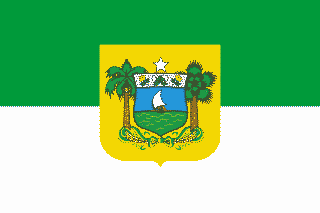
State:

RN
Biome(s):
Region:
Northeast
Key objectives:
Responsible agency:
Neoenergia Cosern, Government of the State of Rio Grande do Norte, National Electric Energy Agency (ANEEL)
Legal Instrument:
Provisional Measure nº 1,300/2025 and regulation by ANEEL (June 2025)
The state-level implementation of the Social Electricity Tariff (TSEE, by its Portuguese acronym) in Rio Grande do Norte has transformed a federal benefit into an effective instrument of energy justice. Since July 5, 2025, the Energy Company of Rio Grande do Norte (Neoenergia Cosern), in partnership with the State Government and under the regulation of the National Electric Energy Agency (ANEEL), has ensured free electricity for the first 80 kWh/month of consumption for low-income families registered in the Single Registry for Federal Social Programs (CadÚnico). The utility implements proactive outreach actions through the “Luz para o Povo” program, expanding access to the benefit in rural areas, quilombola communities and Indigenous territories. Current coverage exceeds 92,600 families, representing approximately 7.4 GWh/year of exempted consumption, equivalent to around R$ 4 million/month in federal tariff subsidies in the state. The measure helps reduce socioeconomic vulnerability and ensure energy security in regions exposed to extreme heat and water scarcity.
- 92,600 families benefited as of August 2025. - 80 kWh/month free per family, equivalent to approximately 7.4 GWh/year of exempted energy. - R$ ~4 million/month in federal tariff subsidies in RN. - Expansion of the “Luz para o Povo” program coverage through proactive outreach in quilombola and Indigenous communities.
- Reduction of energy poverty. - Greater social resilience to extreme climate events. - Increased household income available for food, health and education. - Potential for future integration with energy efficiency and social solar energy programs.
Replicability:
The solution is replicable by any subnational government that integrates energy utilities, social assistance departments and CadÚnico registries. Proactive outreach and community engagement are key success factors. By reducing energy costs for vulnerable households, the policy paves the way for complementary efficiency and distributed generation programs, becoming an entry point for an inclusive energy transition.Innovation:
The innovation lies in translating a national policy into concrete local results, with a territorial and social focus. The coordinated action between the state government, the utility and communities demonstrates how access to energy can be addressed as a climate policy. The benefit ensures energy security, reduces vulnerabilities and enhances equity in responding to climate impacts.Actions
Print or save this solution as a PDF for future reference